
NAS100 NDX Technical Analysis: The Nasdaq Index is trading in a downtrend today, as technical analysis indicates continued selling pressure on the index. Current price movements show fluctuation within a narrow range with a short-term downtrend emerging, reflecting a state of declines in the market.
NAS100 NDX Technical Analysis: Price Analysis
The Nasdaq Index recorded its highest trading price so far at 20643.03 and its lowest price at 20463.54, and is currently trading at 20579.25. This fluctuation within a narrow range indicates the market’s interaction with nearby support and resistance levels in light of the general downtrend.
Technical Analysis:
Prices are trading below the moving averages, which reinforces the downtrend and confirms that the overall market momentum is leaning towards the downside. The MACD indicator also indicates a negative trend, reflecting the continued selling pressure on the index. Trading below the moving averages suggests that buyers are struggling to push prices higher at the moment.
Outlook:
With the continued trading below the moving averages, the Nasdaq is expected to remain under downward pressure in the short-term. It is important to watch the 20481.49 level as a major support level; if broken, it could reinforce the downtrend towards lower levels. If the index fails to break this support, we could see some bullish bounce to test nearby resistance levels.
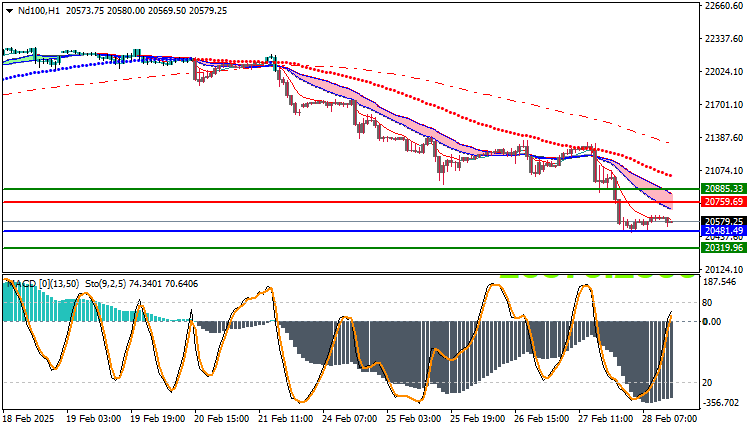
Trading strategies levels on Buy/Sell level
| ND100 | In case of buying | in case of selling |
| Entry point | 20759.69 | 20481.49 |
| Target Point 1 (TP1) | First resistance: 20885.33 | First support: 20319.96 |
| Target Point 2 (TP2) | Second resistance: 21930.00 | Second support: 20250.11 |
| Stop Loss (SL) | 20481.49 | 20759.69 |
The Nasdaq is showing a short-term bearish trend with prices trading below the moving averages, as well as negative signals from the MACD. Traders should carefully monitor key support and resistance levels to identify entry and exit opportunities, while paying attention to any potential trend shifts in the coming sessions.


